.: 3iCreative :.

Pychology + Marketing

  • Psychology
  • Technology
  • Rabbit Hole

New Studies on Alzheimer’s Uncover Genetic Links

04/20/2011 by 3icreative

The two largest studies of Alzheimer’s disease, an international analysis of genes of more than 50,000 people, have led to the discovery of five new genes that make the disease more likely in the elderly and provide tantalizing clues about what might start Alzheimer’s going and fuel its progress in a person’s brain.

The new genes add to a possible theme: so far genes that increase Alzheimer’s risk in the elderly tend to be involved with cholesterol and with inflammation. They also may be used to transport molecules inside cells.

Read the entire article at The New York Times.

Filed Under: Psychology Tagged With: Alzheimer's, Brain

Developing Standards For NeuroMarketing Research?

03/24/2011 by 3icreative

NeuroStandards Collaboration Project is First Independent Review of its Kind; Helps Marketers Evaluate Neuro- and Biometric Market Research Methods

Today at its annual convention, Re:think 2011 – Managing the Complexity Maze: Insights as the Navigator, the Advertising Research Foundation (ARF) unveiled findings from the first phase of its NeuroStandards Collaboration Project, an independent review of current NeuroMarketing methods, the science underlying those methods and the validity of the conclusions. In addition, a plan to continue this process and provide an “Expert Review Network,” a network of independent experts to assist users of this research, was announced.

Results of this collaborative study, when fully completed, will develop standards in an emerging field that, when implemented, can help media, marketing and advertising researchers better understand how consumers react to advertising from a scientific perspective and use this knowledge to make smarter marketing decisions.

NeuroMarketing garnered nationwide attention in 2003 when Read Montague, a neuroscientist at the Baylor College of Medicine, conducted a series of experiments known as the “Pepsi Challenge” using neuroscience technology to study brain activity to explore consumers’ beverage preferences. Since then, there’s been a significant increase in vendors employing NeuroMarketing, as well as in the kinds of methods and analysis techniques used in marketing research. NeuroMarketing’s use, however, has become problematic for marketers to assess what is actually based on the science underlying these methods and what is interpretation, according to the report released today.

Presented by Horst Stipp, EVP, Global Business Strategy at the ARF, Duane Varan, Ph.D., CRO, The Disney Media and Advertising Lab, and Richard Thorogood, director, Insights & Business Analysis at Colgate-Palmolive, the study worked with eight NeuroMarketing vendors across three continents to poll 18-to-49-year-olds on reactions to a series of eight commercials. Participating sponsor brands included American Express, Campbell Soup, Chase, Clorox, Colgate-Palmolive, General Motors, Hershey’s and MillerCoors.

This is the first major validation study designed to assess neuroscience as it applies to media and advertising response. Methods used in this study included facial coding, biometrics, electroencephalography (EEG), quantitative EEG, facial electromyography (fEMG), steady-state topography (SST) and functional magnetic resonance imaging (fMRI). Participating NeuroMarketing-suppliers included Innerscope, Mindlab International, MSW/LAB, NeuroCompass, Neuro Insight, Neurosense/decode, Sands Research and Sensory Logic. Media sponsors included ESPN, MTV Networks, NBC and Turner Broadcasting.

“NeuroMarketing, when done properly, is extremely valuable in providing learning regarding consumer attention and involvement, and emotional reactions,” said Horst Stipp, EVP, Global Business Strategy at the ARF. “But, the application of this complex science to marketing is still developing and there are a number of questions and concerns that surround the field. Marketers can use the insights from this project to become educated consumers in regards to the use of NeuroMarketing techniques.”

NeuroStandards Project Insights:

These results indicate many reasons that an evaluation process is essential:

  • Commercials and video materials contain rapidly-changing images, words and music; complex stimuli generate complex viewer reactions that can make it difficult to isolate elements that cause specific reactions.
  • Different images elicit reactions with different lag times: the brain reacts to the image of potential danger (such as the image of a snake) faster than less threatening imagery (a pleasant landscape). Also, the viewer’s reaction at a given point may reflect anticipation of the next images rather than a reaction to images seen at that moment.
  • Reactions to one scene within a commercial are likely to be influenced by the preceding content. Interactions between the images, sounds and words need to be untangled to pinpoint causes of viewer response.
  • Measuring “attention” (and related reactions) is less complex than measuring specific emotions and purchase intent. Reactions to one specific region of the brain cannot always be interpreted as indicative of one specific emotion.

These insights yielded several best practice recommendations for identifying neurological and biometric methods that best meet marketers’ research objectives. Additionally, it recommends that NeuroMarketing be employed as an addition to — not a substitute for — “traditional” research methods.

“Neuroscience has become a valuable tool in the marketing-decision process and the ARF NeuroStandards Collaboration Project provides a unique opportunity for the industry to assess many of the diverse approaches to this science in an open and equitable manner,” said Richard Thorogood, Director of Strategic Insights and Analytics, Colgate-Palmolive. “Given its increasing use by the advertising community, it behooves marketers and researchers who participate in NeuroMarketing to support the ARF in setting the standards now in order to ensure its most effective use.”

The second phase of the ARF NeuroStandards Collaboration Project, called NeuroStandards 2.0, will be detailed in a white paper planned for publication in summer 2011 and will inform strategy for the next iteration of the project, which includes a NeuroStandards Forum and special seminars for ARF members.

Filed Under: Neuromarketing Tagged With: Neuromarketing

Neural Degeneration, Regeneration & Reorganization

03/19/2011 by 3icreative

Neural degeneration

Anterograde & Retrograde Neuron Degeneration
Any time there is damage to the cell body, the result is cell death. If there is damage to the axon, death is not certain.

  • Anterograde degeneration – Breakdown of an axon from the point of damage back toward the terminal button
  • Retrograde degeneration – Breakdown of an axon from the point of damage back toward the cell body
  • Chromatolysis – Retrograde degeneration can spread toward cell body
  • Transneuronal degeneration – Spreads to neighboring cells

Neuron regeneration

What kind of recovery can we expect? Neuron regeneration will occur in the Peripheral Nervous System (PNS), but not the CNS (brain and spinal cord). And in the PNS, even if neurons do regenerate, there is no guarantee that they will connect. Just because the potential is there, it does not mean that things will “hook up” correctly.

Why no regeneration in the Central Nervous System?

  • No glycoproteins – Growth-promoting glycoproteins are present in the PNS only.
    • Laminin and fibronectin – Necessary for development of growth cone/neuron
    • Oligodendrocytes – Glycoproteins that inhibit growth are present in the CNS. Remember, oligodendrocytes are a type of CNS glial cell responsible for forming myelin sheath. Schwann cells do this in the PNS.

This is seen in transplant studies. When you transplant a PNS cells to the CNS, they do not regrow. When you transplant CNS cells to PNS, they can regrow. Therefore, the ability for these cells to regenerate is dependent on the cellular environment.

Brilliant Blue G

Studies have found that Brilliant Blue G dye (found in M&Ms) may be beneficial in reducing inflammation, swelling and the formation of scar tissue following a spinal cord injury, allowing more time for treatments. Unfortunately, one of the side effects of Brilliant Blue G is that it turns you blue, as seen in this rat. Testing is still in progress to determine if this treatment can be used effectively in humans.

Spinal cord research

Lesions on spinal cord… Looking for drugs that encourage regeneration by neutralizing growth-inhibiting proteins (MAG and No-Go). Today, we are able to recover some functions, but they are reflexive in nature and happen at the level of the spinal cord, not the brain. For example, increases in stride length versus limb placement (picking up a limb in response to sensory input). This is demonstrated when a paraplegic’s body’s is suspended (body weight supported) and placed on a treadmill using Lokomat system. This activates a reflex as if you are falling, causing you to step forward. With practice, this can be refined, so steps do not appear so robotic. Today, advances in technology have led to robotic exoskeletons that make it possible for some paraplegics to walk again. A sensor is placed on the body that reads signals from the brain transmitted to the nerves, that then activate the exoskeleton to move as desired.

Neural reorganization

Collateral sprouting is when a neighboring cell and move in and form new cell connections, fill vacant cell receptor sites. You see things like Mirror Box Treatments for Phantom Limb Pain, the visual input allows people to feel relaxation. The parts of the brain that process the missing limb are still being activated, where are they getting their information from?

Filed Under: Psychology Tagged With: Brain, psychology

Types of Brain Damage

03/19/2011 by 3icreative

Cancerous Brain Tumors

6 Causes of Brain Damage

There are 6 causes of brain damage: 1) Brain tumors; 2) Cerebrovascular Disorders; 3) Closed Head Injuries; 4) Brain Infections; 5) Neurotoxins; and 6) Genetic Factors. The behavioral consequences of brain damage depend on where the damage is taking place in the brain.

1) Brain tumors

  • Neoplasm – A neoplasm is a new growth in the brain. Some may be cancerous, some may not.
  • Meningiomas – About 20% of brain tumors are meningiomas, or tumors that grow between the 3 membranes in the central nervous system. Because they occur on the outside layers of the brain, they are easier to remove. They do not invade brain tissue. All meningiomas are encapsulated tumors.
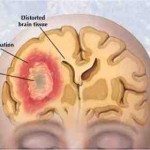
  • Brain Tumor
    Photo from forum.urduworld.com
  • Encapsulated tumors – Encapsulated brain tumors are ones that grow within their own membrane. These types of brain tumors are usually easily to identify on a CT scan – and benign, meaning they are not cancerous. Because encapsulated brain tumors are clearly defined, they are also typically easier to remove than other types of brain tumors. However, damage may have been to the surrounding tissue, causing the death of neurons, which may have permanent consequences.
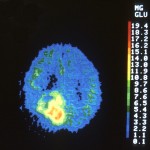
  • Infiltrating Brain Tumor
    Photo from nist.gov
  • Infiltrating tumors – Infiltrating tumors invade the surrounding brain tissue. They have undefined edges, and are most often malignant (cancerous).
  • Metastatic brain tumors – About 10% of brain tumors originate elsewhere in the body. These types of brain tumors occur when pieces of a tumor break off and spreads to the brain through the bloodstream. Most metastatic brain tumors originated from a lung cancer. Once cancer spreads into brain, fragments often break off and invade the lymphatic system, and easily spread to other parts of the body. (The lymphatic system is the system of nodes and capillaries.)

Each year, about 150,000 people are diagnosed with a metastatic brain tumor in the U.S.

2) Cerebral vascular disorders

Strokes – the 3rd leading cause of death in the U.S. – are sudden-onset disorders that cause brain damage. There are two main types:

  • Cerebral hemorrhage – Bleeding in the brain caused by a ruptured blood vessel
    • Aneurysm – Balloon-like dilation in the vessel wall which can be congenital or due to exposures to infection or toxins
  • Cerebral ischemia – Medications can be used to dissolve blockages in the brain. The blood vessels are too small to use the same types of procedures used in other parts of the body.
    • Thrombosis – Blocks blood supply
    • Embolism – Comes from another location, and travels through the blood stream after breaking off from another site

3) Closed head injuries

  • Cerebral contusions – Includes damage to the circulatory system, like hemotomas (clotted blood) and concussions (consciousness is disrupted, but there is no structural damage)

Chronic Traumatic Encephalopathy (CTE)

This is a long-term condition due the the result of multiple concussions (closed head injuries) often seen in professional and even amateur football players. Also often referred to as “Punch Drunk Syndrome” in relation to the brain damage incurred by professional boxers. This is a progressive disease in that those with CTE will end up needing cared for.

4) Brain infections

  • Bacterial infections of the brain – Meningitis, syphilis
  • Viral infections of the brain – Rabies, herpes simplex 1 (can lead to swelling of the brain/encephalitis)

5) Neuropsych diseases

Parkinson’s Disease

Parkinson’s is caused by insufficient dopamine biosynthesis in the dopaminergic neurons of the brain that result in communication problems between the substantia nigra and basal ganglia. Parkinson’s is a progressive disease that eventually causes rigidity of the limbs and tremors at rest. During the early stages, L-Dopa may be given to “super-charge” the remaining neurons. However, it does not stop the long-term progression of the disease. Embryonic stem cell (plurypotent neurons) implants in the substantia nigra done outside the U.S. are showing some promise/success in the treatment of Parkinson’s disease. Deep brain stimulation (DBS) in which an electrode is implanted in the brain near the substantia nigra also shows some success in treating symptoms of the disease, which slows, but does not stop the progression of the diease. Michael J. Fox has Parkinson’s disease, as seen in the video below.

Huntington’s Disease

Is the result of damage to the caudate nucleus and putamen that causes uncontrollable jerky movements. Symptoms typically begin to appear around age 40, and children who have a parent with Huntington’s have a 50/50 chance of inheriting the disease. Genetic testing is available for early diagnosis of Parkinson’s disease. Woody Guthrie died in 1967 as a result of Huntington’s disease, and Carol Carr made national news for killing her sons that were also affected by the disease.

6) Neurotoxins

content here

Filed Under: Psychology Tagged With: Brain, psychology

Fragile X Researcher Honored for Contribution to Genetic Sciences

03/17/2011 by 3icreative

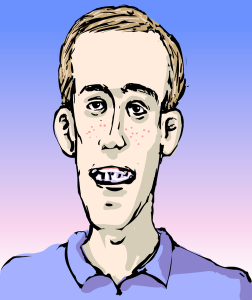
Fragile X Syndrome
Prominent characteristics of the syndrome include an elongated face, large or protruding ears, and low muscle tone.

World-renowned researcher Dr. Stephen T. Warren — the first to identify the long-sought genetic abnormality responsible for fragile X syndrome — will be honored by the March of Dimes.

Stephen T. Warren, PhD, the William Patterson Timmie Professor of Human Genetics and Charles Howard Candler chair of the Department of Human Genetics, as well as professor of biochemistry and pediatrics at Emory University School of Medicine, will receive the March of Dimes/Colonel Harland Sanders Award for Lifetime Achievement in the field of genetic sciences.

Fragile X syndrome is an inherited genetic condition that is the result of an abnormality in the X chromosome, specifically the FMR1 gene. It is the leading cause of inherited intellectual disability. Fragile X can be passed on in a family by individuals who have no signs of this genetic condition. In 1991, Dr. Warren — initially funded by a March of Dimes Basil O’Connor Starter Scholar Award — and colleagues published their findings about fragile X syndrome, including the affected protein. Dr. Warren has successfully applied his research findings to clinical settings.

Dr. Warren received his doctorate in human genetics in 1981 from Michigan State University and in 1985 joined the faculty of Emory University School of Medicine. Dr. Warren was elected to the Board of Directors of the American Society of Human Genetics in 1997 and elected its president in 2006. He was also editor-in-chief of The American Journal of Human Genetics from 1999 until 2005.

Dr. Warren has received many honors for his fragile X syndrome research, including:

  • Albert E. Levy Faculty Award from Emory University
  • MERIT award from the National Institutes of Health
  • William Allan Award from the American Society of Human Genetics
  • Elected to the Institute of Medicine of the National Academy of Science.
  • Awarded the inaugural William Rosen Research Award from the National Fragile X Foundation

Established in 1986, the March of Dimes/Colonel Harland Sanders Award is given annually to an individual whose lifetime body of research and education has made a significant contribution to the genetic sciences.

Filed Under: Psychology Tagged With: Genetics

  • « Previous Page
  • 1
  • …
  • 3
  • 4
  • 5
  • 6
  • 7
  • …
  • 9
  • Next Page »
  • About
  • Contact

Privacy Policy

Copyright © 2025 3iCreative LLC